Need help with booking? Send us a message.
Hotel in Kathmandu and Pokhara and Lodge / Tea House during trek
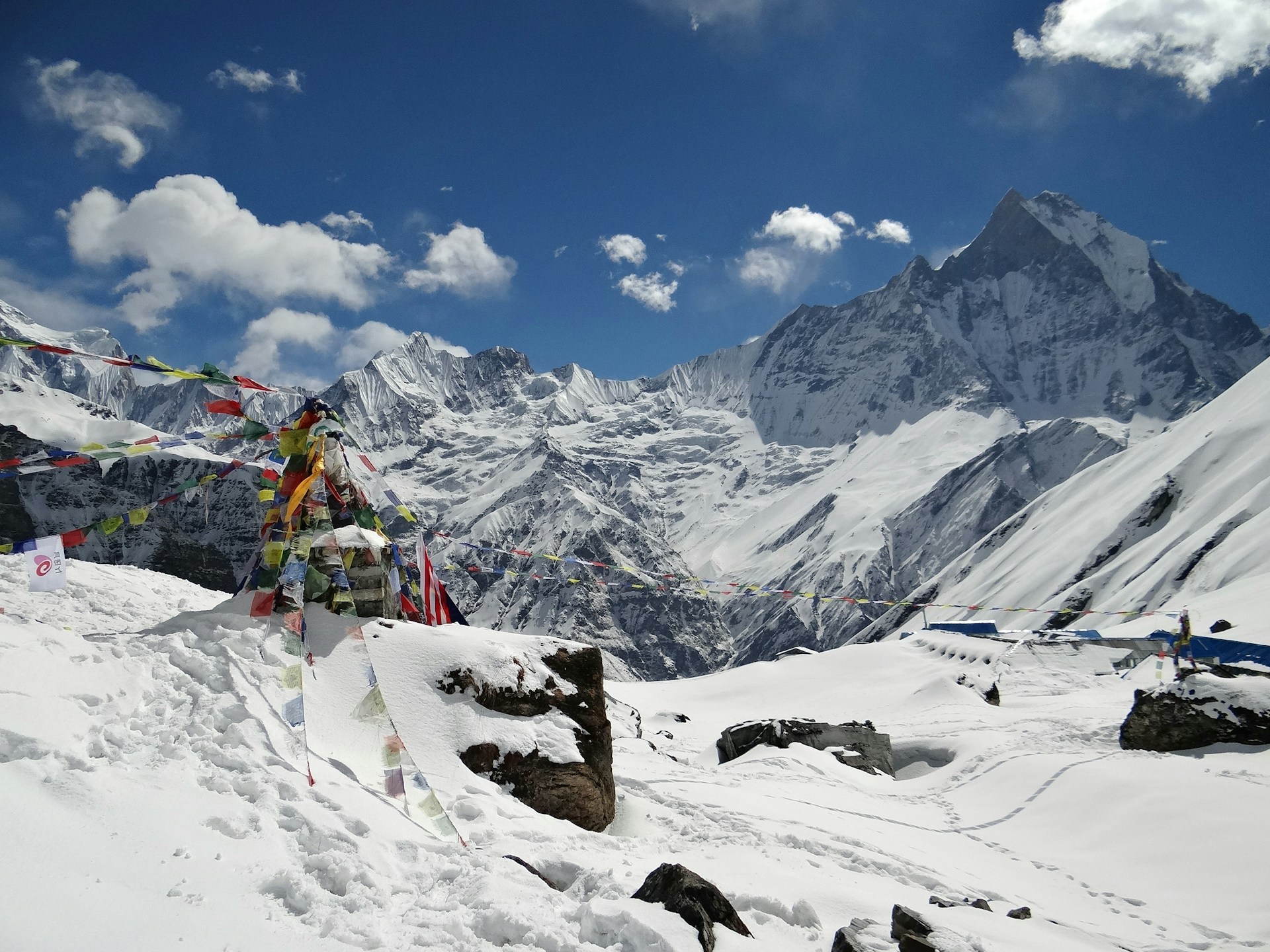
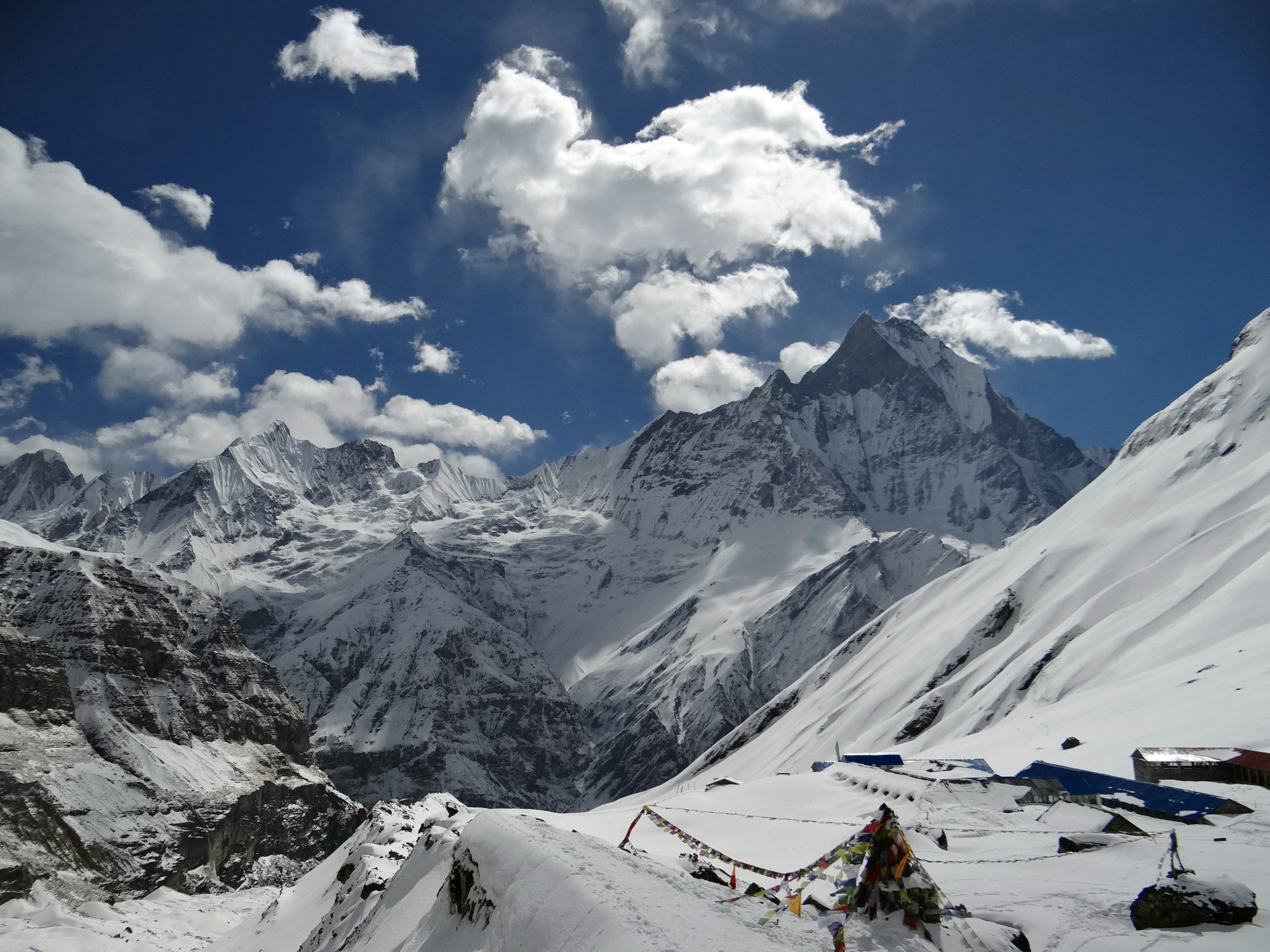
The Annapurna Base Camp Trek operated by Himalayan Mantras is one of Nepal’s most iconic Himalayan journeys, combining cultural immersion with dramatic alpine landscapes. The route gradually ascends from the bustling valleys of Kathmandu and the lakeside charm of Pokhara into the heart of the Annapurna Sanctuary. This natural amphitheater is surrounded by towering peaks such as Annapurna I, Machhapuchhre, and Hiunchuli, culminating at Annapurna Base Camp at 4,130 meters.
The 13-day itinerary is designed to balance adventure and acclimatization. Trekkers pass through traditional Gurung villages, rhododendron forests, and river valleys while experiencing authentic Himalayan hospitality. Key stops such as Ghandruk, Chomrong, and Deurali provide gradual altitude gain and cultural depth.
The best seasons for the Annapurna Base Camp Trek with Himalayan Mantras are spring (March–May) and autumn (September–November). During these months, the weather is stable, skies are clear, and mountain views are at their most spectacular. Spring brings blooming rhododendrons across trails between Nayapul and Ghandruk, while autumn offers crisp air and excellent visibility of the Annapurna range.
Winter (December–February) is also possible but colder, especially near higher camps like Annapurna Base Camp. Snow may block trails beyond Deurali. Monsoon season (June–August) is least recommended due to heavy rainfall, leeches, and slippery trails, particularly in forested sections near Chomrong and lower villages.
Seasonal highlights:
Each season offers a different personality of the Himalayas, and Himalayan Mantras helps tailor the trek depending on your comfort and preference.
The Annapurna Base Camp Trek is considered a moderate-level trek, suitable for beginners with good fitness as well as experienced hikers. The daily walking duration ranges from 5 to 7 hours, with gradual altitude gain as trekkers move from Chomrong to higher elevations like Dovan and Deurali before reaching Annapurna Base Camp. The main challenge is altitude and continuous uphill sections rather than technical climbing.
Transportation is well-managed by Himalayan Mantras, ensuring smooth transfers throughout the journey. The trip begins with arrival in Kathmandu, followed by a tourist bus or private vehicle ride to Pokhara. From there, a scenic drive reaches Nayapul, the trek starting point. After completing the trek, the return journey follows the same route back to Kathmandu.
Difficulty breakdown:
Accommodation along the Annapurna Base Camp route is primarily in local teahouses, offering simple but comfortable lodging. Managed through Himalayan Mantras, trekkers stay in twin-sharing rooms with basic bedding facilities. In villages like Ghandruk, Chomrong, and Bamboo, teahouses provide warm hospitality and traditional Nepali service.
Food is freshly prepared and includes a mix of Nepali and international dishes. The most common and recommended meal is Dal Bhat (rice, lentils, vegetables), which provides high energy for trekking days. Higher up near Deurali and Annapurna Base Camp, food options become simpler due to remoteness, but are still nutritious and filling.
Food and accommodation features:
Key comfort notes:
Himalayan Mantras ensures clean, safe, and pre-arranged accommodations throughout the trek.
To complete the Annapurna Base Camp Trek, trekkers require official permits regulated under Nepal’s trekking system. Himalayan Mantras handles all documentation in advance to ensure a smooth journey without administrative delays.
The two main permits required are the Annapurna Conservation Area Permit (ACAP) and the Trekkers’ Information Management System (TIMS) card. These permits are checked at multiple points, especially around entry routes such as Nayapul and village checkpoints like Chomrong.
Permit details:
Why permits matter:
Himalayan Mantras includes all permit arrangements in the package cost, ensuring trekkers can focus entirely on the journey from Pokhara to Annapurna Base Camp without logistical concerns.
The Annapurna Base Camp Trek is not just a hike—it is a full Himalayan experience, and Himalayan Mantras enhances this journey with professional guidance, safety, and personalized service. The route from Kathmandu to Annapurna Base Camp offers a perfect blend of nature, culture, and adventure, making it ideal for both first-time and experienced trekkers.
One of the key advantages of choosing Himalayan Mantras is their attention to acclimatization, comfort, and cultural immersion. The itinerary includes important rest points in villages like Ghandruk and Jhinu Danda, where trekkers can enjoy natural hot springs and local hospitality. The experienced guides ensure safety in challenging sections near Deurali and above.
Key reasons to choose this trek:
Additional benefits:
With Himalayan Mantras, the Annapurna Base Camp Trek becomes more than a destination—it becomes a deeply personal Himalayan journey filled with memories, landscapes, and cultural connections.
Upon your arrival at Kathmandu, a representative from Himalayan Mantras will warmly receive you at the airport and transfer you to your hotel in the bustling valley city. After check-in and some rest, you will attend a pre-trip briefing where your guide explains the trekking route, safety measures, and necessary preparations for the journey ahead. In the evening, you will be welcomed with a traditional Nepali dinner hosted by the company, offering you your first taste of local cuisine and culture. This is also a great opportunity to meet fellow trekkers and the support team, setting a friendly tone for the adventure ahead in the Annapurna region.
Today is dedicated to exploring the cultural treasures of Kathmandu. With a professional guide from Himalayan Mantras, you will visit UNESCO World Heritage Sites such as Swayambhunath (Monkey Temple), Boudhanath Stupa, and Pashupatinath Temple. These landmarks reflect Nepal’s deep spiritual heritage, blending Hindu and Buddhist traditions. You will also stroll through vibrant local markets and narrow heritage streets filled with handicrafts, prayer flags, and traditional architecture. The day helps you acclimatize while also offering insight into Nepalese history and daily life. In the evening, you return to your hotel for final trek preparations and equipment checks before heading toward the mountains.
After breakfast, you begin a scenic drive from Kathmandu to Pokhara, passing through winding roads, rivers, and hillside villages. The journey takes around 6–8 hours, depending on road conditions, and offers beautiful views of terraced fields and distant snow peaks. Upon arrival in Pokhara, you check into a lakeside hotel near Phewa Lake. In the evening, you enjoy a peaceful walk along the illuminated lakeside promenade, with reflections of Annapurna ranges shimmering in the water. Himalayan Mantras ensures a relaxed pace today so you can rest and prepare for the trekking days ahead.
Early in the morning, you drive from Pokhara to Nayapul, the starting point of the trek. From here, the journey officially begins as you trek through lush forests, suspension bridges, and small villages inhabited by the Gurung community. The trail gradually ascends toward Ghandruk, one of the most picturesque villages in the Annapurna region. Throughout the day, you are rewarded with stunning views of Machapuchare and Annapurna South. Upon arrival, you explore the traditional stone houses and local museum, experiencing authentic mountain culture. Overnight stay in a teahouse arranged by Himalayan Mantras.
Today’s trek begins with a descent and then a challenging uphill climb through forests and terraced farmland toward Chhomrong, a key gateway to the Annapurna Sanctuary. The trail offers changing landscapes, from subtropical vegetation to alpine surroundings, with frequent views of snow-capped peaks. You will cross suspension bridges and pass small settlements where locals warmly greet trekkers. Chhomrong sits beautifully on a hillside, offering panoramic views of Annapurna South and Hiunchuli. Himalayan Mantras ensures a comfortable pace with rest stops, allowing you to acclimatize properly while enjoying the natural beauty and cultural richness of the region.
Leaving Chhomrong behind, you descend steep stone steps to cross the Chhomrong Khola before ascending into dense bamboo and rhododendron forests. The trail becomes quieter and more remote as you approach Dovan, located deep within the Modi Khola valley. This section of the trek is known for its serene environment, waterfalls, and occasional wildlife sightings. The atmosphere becomes cooler and more alpine as altitude increases. Himalayan Mantras guides ensure steady pacing and proper hydration throughout the day. Overnight stay in a cozy teahouse surrounded by forest, where the sound of the river adds to the peaceful mountain ambiance.
Today’s trail gradually ascends through bamboo forests and narrow valleys toward Deurali. As you climb higher, vegetation becomes sparse, and the landscape turns more rugged and dramatic. You pass Himalayan Hotel and several scenic resting points where waterfalls cascade from steep cliffs. The air becomes noticeably thinner, so the pace is adjusted carefully by your Himalayan Mantras guide. Deurali is a quiet mountain stop surrounded by towering cliffs and snowy ridges, offering breathtaking views of the surrounding peaks. Overnight stay helps your body prepare for the final ascent to the Annapurna Sanctuary.
This is the most anticipated day as you trek toward Annapurna Base Camp. The trail ascends through the Modi Khola valley, gradually opening into the spectacular Annapurna Sanctuary. As you arrive, you are surrounded by a 360-degree amphitheater of towering peaks including Annapurna I, Machapuchare, and Hiunchuli. The sense of achievement is immense as you stand at the base of one of the world’s highest mountains. Himalayan Mantras organizes a celebratory moment at the base camp, allowing time for photography, reflection, and exploration. Overnight stay at ABC under the star-filled Himalayan sky is a truly unforgettable experience.
After witnessing the sunrise over the Himalayas, you begin your descent back toward Bamboo. The trail retraces through alpine landscapes into greener forest zones. While descending is easier on breathing, it requires careful footing due to steep sections. You pass through Deurali and Dovan again, enjoying different perspectives of the terrain. Himalayan Mantras ensures adequate rest breaks and encourages a relaxed pace. Bamboo, surrounded by thick vegetation, offers a peaceful retreat where you can rest your tired legs after the high-altitude achievement of ABC.
Today’s journey continues downhill through lush forests and river valleys toward Jhinu Danda, famous for its natural hot springs. The trail includes both gentle descents and occasional climbs, passing small villages and scenic waterfalls. Upon reaching Jhinu Danda, you have the option to relax in the natural hot springs located near the river, a perfect way to soothe tired muscles after days of trekking. Himalayan Mantras organizes a comfortable overnight stay in a local lodge, allowing you to unwind and enjoy the peaceful surroundings of the lower Annapurna region.
On the final trekking day, you descend through terraced fields and forest trails back to Nayapul. The trek is relatively easier but still scenic, offering final glimpses of rural Himalayan life. Upon arrival at Nayapul, your vehicle from Himalayan Mantras will be waiting to transfer you back to Pokhara. Once in Pokhara, you return to your lakeside hotel and enjoy a relaxed evening by Phewa Lake. This is a celebratory moment to reflect on the completed journey through the Annapurna region.
After breakfast, you begin your return journey to Kathmandu by tourist bus, retracing the scenic highway through rivers and hills. Upon arrival, you are transferred to your hotel for rest and freshening up. In the evening, Himalayan Mantras hosts a special farewell dinner featuring traditional Nepali cuisine and cultural performances. This is a celebratory gathering where trekkers and guides share memories of the journey, highlighting the highlights of the Annapurna Base Camp experience. It is a warm and emotional conclusion to your Himalayan adventure.
On your final day, depending on your flight schedule, a representative from Himalayan Mantras will transfer you to Tribhuvan International Airport in Kathmandu. As you depart, you carry unforgettable memories of the Annapurna Base Camp Trek, from cultural experiences in Kathmandu to the breathtaking mountain sanctuary. The journey with Himalayan Mantras concludes, but the impressions of the Himalayas, local hospitality, and personal achievement will remain with you for a lifetime.
Your Start Date is the day you land in Nepal, and your End Date is when you fly home.
If the set Annapurna Base Camp Trek group dates don’t suit your schedule, we can offer alternative dates upon request.
The Annapurna Base Camp Trek was truly a once-in-a-lifetime experience with stunning Himalayan scenery, diverse landscapes, and warm local hospitality. The whole trek was well managed from start to finish. Huge appreciation to Himalayan Mantras for their excellent guidance, safety, and professional service throughout the journey.
The Annapurna Base Camp Trek is considered a moderate-level trek, suitable for beginners with good fitness as well as experienced trekkers. The trail involves daily walking of 5–7 hours on varied terrain, including stone steps, forest paths, and steep ascents and descents. While no technical climbing skills are required, altitude and endurance play an important role. As you ascend above 4,000 meters, the air becomes thinner, which can make walking more tiring. Himalayan Mantras ensures a well-paced itinerary with proper acclimatization days and experienced guides to support trekkers throughout the journey, making the adventure both safe and achievable.
Yes, altitude sickness is a possible risk on the Annapurna Base Camp Trek, especially as you ascend above 3,000 meters. Symptoms may include headache, dizziness, nausea, and fatigue. However, the risk is manageable with proper acclimatization, hydration, and a steady walking pace. The itinerary designed by Himalayan Mantras includes gradual elevation gain to help the body adjust naturally. Experienced guides continuously monitor trekkers’ health and provide necessary support if symptoms appear. In rare cases, descent to lower altitude is advised for safety. Proper preparation significantly reduces the chances of severe altitude-related issues.
Internet and mobile network coverage are available in many parts of the Annapurna region, but connectivity becomes weaker and less reliable at higher altitudes. In lower villages like Ghandruk and Chhomrong, mobile signals and Wi-Fi are often accessible in teahouses, though speeds may be slow. As you approach Annapurna Base Camp, connectivity is limited or unavailable. Himalayan Mantras advises trekkers to inform family members in advance about possible communication gaps and encourages enjoying the digital detox experience that comes with being deep in the Himalayas.
Choosing Himalayan Mantras ensures a safe, well-organized, and enriching trekking experience in the Annapurna region. The company provides experienced licensed guides, carefully planned itineraries, quality accommodation selection, and full logistical support including permits and transportation. Their focus is not only on reaching Annapurna Base Camp but also on cultural immersion, responsible tourism, and personalized care for each trekker. From arrival in Kathmandu to the final departure, Himalayan Mantras ensures smooth coordination and professional service. Their dedication to safety, comfort, and authentic Himalayan experiences makes them a trusted trekking partner in Nepal.
The best seasons for the Annapurna Base Camp Trek are spring (March to May) and autumn (September to November). During these months, the weather is generally stable, skies are clear, and mountain views are spectacular. Spring brings blooming rhododendron forests, while autumn offers crisp air and excellent visibility of the Himalayas. Winter is also possible but colder, especially at higher elevations, and monsoon season (June to August) brings heavy rainfall and slippery trails. Himalayan Mantras carefully schedules departures in optimal trekking seasons to ensure safety, comfort, and the best possible Himalayan experience for trekkers.
Yes, trekkers are required to obtain specific permits for the Annapurna region. The main permits include the Annapurna Conservation Area Permit (ACAP) and a Trekker’s Information Management System (TIMS) card. These permits help support conservation efforts and ensure trekker safety within the region. When you book your trek with Himalayan Mantras, all necessary permits are arranged in advance by the company, so you do not need to worry about paperwork. This allows you to focus entirely on your trekking experience while ensuring compliance with local regulations and environmental protection standards.
Accommodation on the Annapurna Base Camp Trek consists mainly of teahouses and mountain lodges run by local families. These lodges provide basic but comfortable facilities, including a bed, blankets, and shared bathrooms in most locations. As you ascend higher, amenities become more simple due to remoteness, but hospitality remains warm and welcoming. In lower regions, such as Ghandruk and Chhomrong, facilities are more developed with private rooms and better food options. Himalayan Mantras carefully selects clean and reliable lodges along the route to ensure trekkers have a safe and comfortable resting place each night.
During the Annapurna Base Camp Trek, teahouses offer a variety of freshly prepared meals, typically including Nepali, Tibetan, and basic international dishes. The most common meal is dal bhat (rice, lentil soup, vegetables), which is nutritious and provides energy for trekking. Other options include noodles, pasta, soups, fried rice, pancakes, and eggs. As altitude increases, the menu becomes simpler due to supply limitations. Himalayan Mantras ensures trekkers are well-informed about safe eating habits and encourages fresh, hygienic food choices throughout the journey to maintain energy and avoid digestive issues in the mountains.
Packing correctly is essential for a successful trekking experience. Key items include sturdy trekking boots, warm layers, a waterproof jacket, thermal clothing, gloves, a hat, and sunglasses. A good-quality backpack, sleeping bag, water bottles, sunscreen, and personal medication are also important. Weather conditions can change rapidly in the Himalayas, so layering is crucial. Himalayan Mantras provides a detailed packing list before departure and assists trekkers in preparing appropriately. Carrying light but essential gear ensures better comfort and stamina during long trekking days in varying mountain conditions.
You do not need to be an athlete, but a reasonable level of fitness is important for the Annapurna Base Camp Trek. Regular walking, light jogging, or cardio exercises for a few weeks before the trek can greatly improve endurance. The trek involves long walking hours, steep climbs, and altitude gain, which can be physically demanding. Himalayan Mantras recommends preparing your body with stamina-building exercises and practice hikes if possible. Mental preparation is equally important, as trekking in the Himalayas requires patience, determination, and a positive attitude to fully enjoy the experience.